
GROUNDWORK #03
Stepping Stones in Grass
Observation
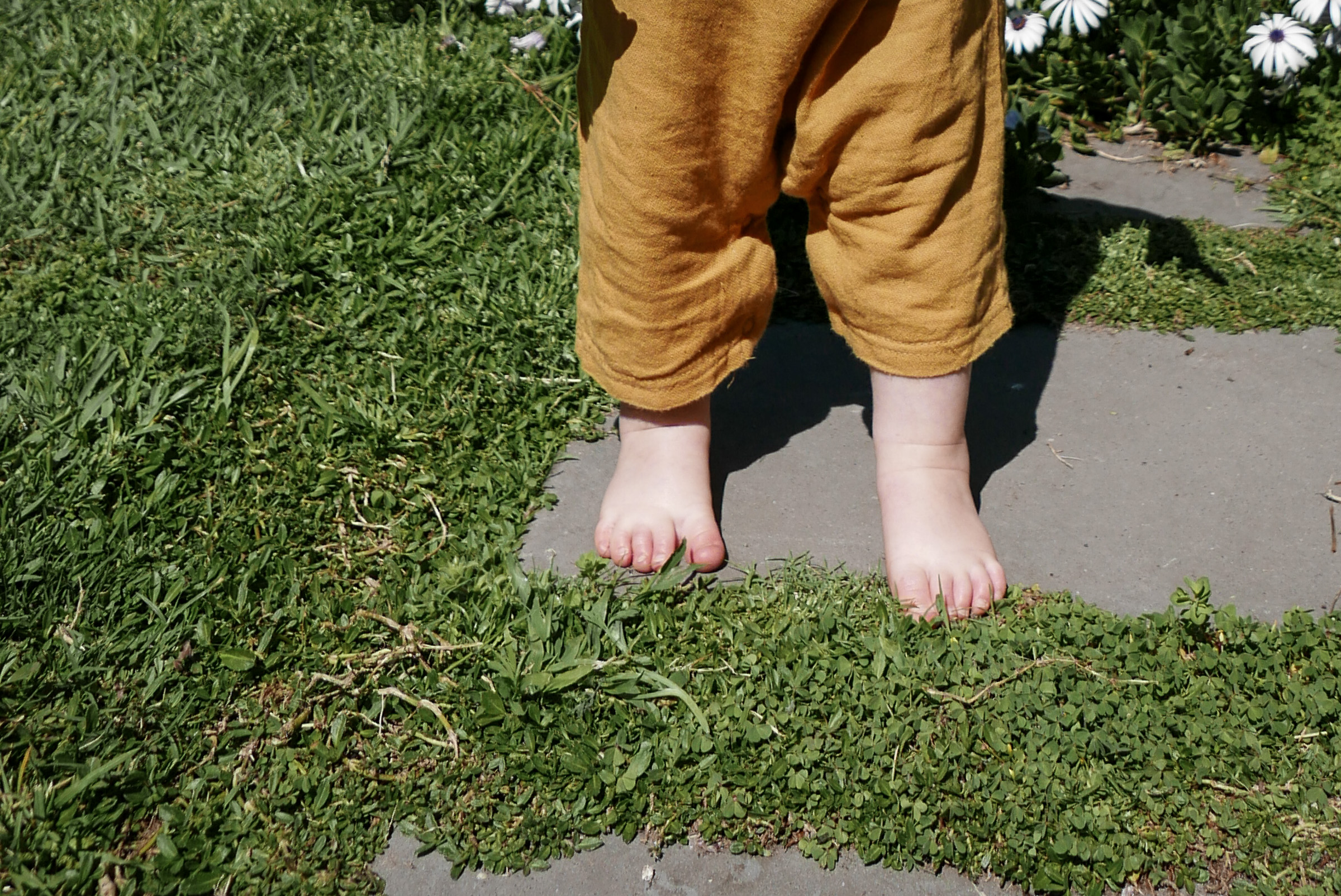
Stepping stones offer a quieter alternative to continuous paving. Rather than establishing a clearly defined path, they suggest movement through a landscape while allowing planting and lawn to remain the dominant elements.
Design Principle
The most successful stepping stone paths feel naturally connected to the garden around them. Planting is allowed to soften the edges, while the spacing between stones establishes a comfortable walking rhythm. The result is a route that guides movement without becoming visually dominant.

Material Insight
Larger paving units are particularly effective as stepping stones because they provide stability underfoot while maintaining a simple visual language. When paired with lawn or low-growing groundcovers, the distinction between hardscape and planting becomes intentionally blurred.

Takeaway
Stepping stones create access without requiring large paved surfaces, allowing circulation through a garden while preserving a softer and more natural character.
Design Reference
Stepping stones are frequently used in residential gardens to create informal circulation routes while allowing planting and lawn to remain visually dominant.
Groundwork Insight
Good landscape design is often less about defining boundaries and more about allowing materials and planting to overlap. Stepping stones demonstrate how circulation can be introduced without separating people from the garden experience.


